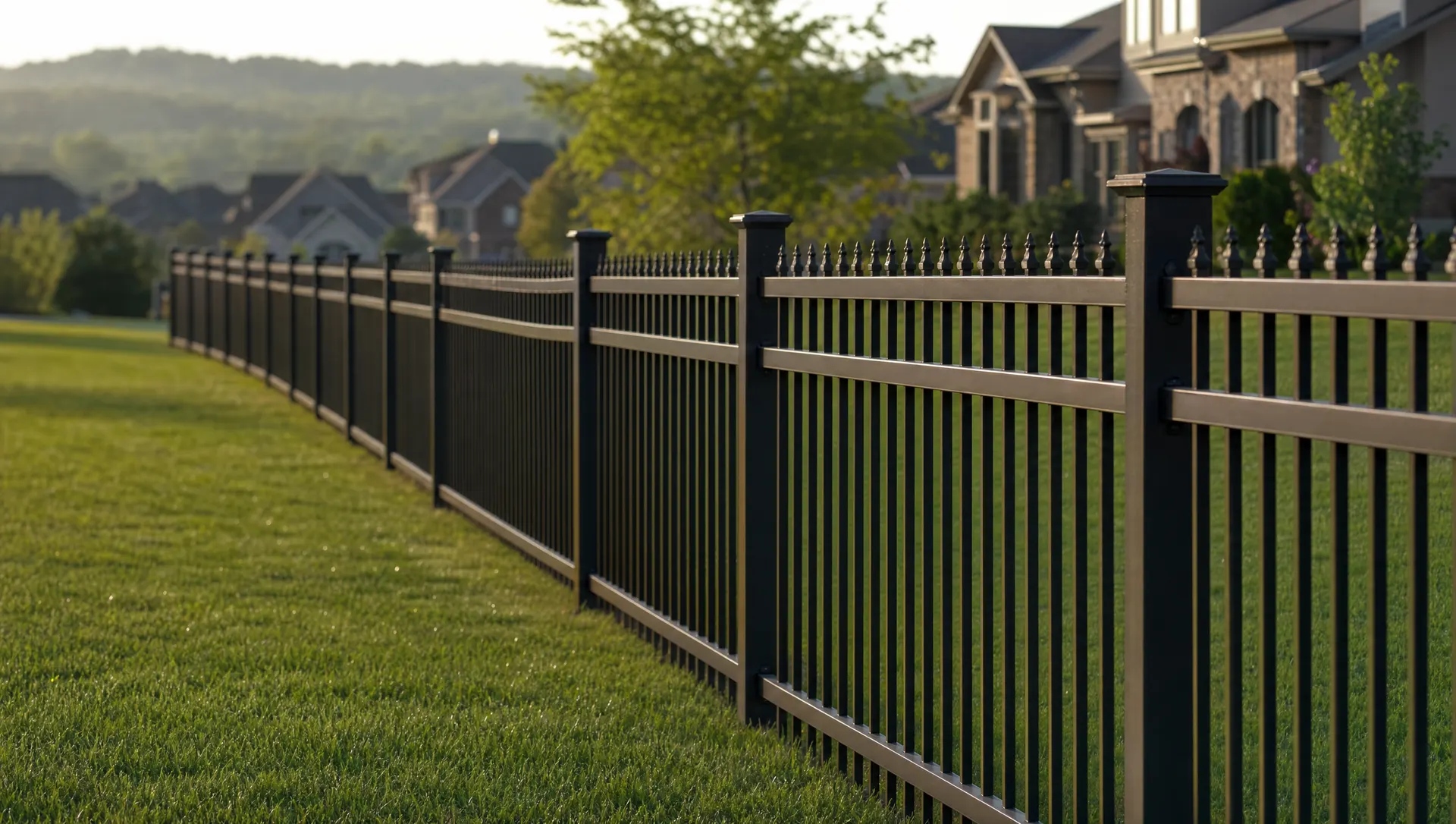
Fence Repair in Joplin, Missouri
Not every damaged fence needs to come out and start over. A leaning post, a few cracked panels, a gate that no longer latches, or a section a storm took down can usually be fixed without touching the rest of a fence that's otherwise sound. Joplin Fencing handles fence repair across Joplin — post resets, panel and picket replacement, gate realignment, and full section rebuilds where that's actually the better call.
What's Included
Repair work starts with a real look at the fence, not just the obvious problem spot:
- Full-line inspection to catch secondary issues before they become the next call — a fence rarely fails at just one point without related wear nearby
- Post reset or replacement, including re-setting a post that's leaning but structurally fine versus fully replacing one that's rotted or snapped at the base
- Panel and picket replacement, matched to the existing fence style and material where a reasonable match is available
- Gate realignment and hardware replacement — hinges, latches, and posts sized to actually carry the gate's weight
- Rail splicing and repair for damaged sections that don't require a full post-to-post rebuild
- An honest read on whether a full section replacement makes more sense than patching, when that's genuinely the case
We'll tell you which category your fence falls into rather than defaulting to whichever answer involves more work.
Why So Many Joplin Fences Need Repair at Once
There's a pattern to fence repair calls in this town, and it traces straight back to 2011. The tornado rebuild put up an enormous number of fences within a short window of each other, which means a large share of Joplin's fencing is now in a similar age range — and aging in similar ways at similar times. Sun exposure, ground movement, and general wear don't announce themselves until they do, and a lot of that rebuild-era fencing is hitting that point together rather than being spread evenly across decades like it would be in a town that grew more gradually.
Wind adds to it. Spring storms across southwest Missouri put real stress on fence lines every year, and a fence that was marginal to begin with — posts set a little too shallow, spacing a little too wide — is exactly what gives out first. We see this most on solid privacy panels, which catch wind directly, more than on open styles like chain link or farm wire.
Ground conditions play a role in the repair itself, too. In areas shaped by the old lead and zinc mining district, rocky or chat-heavy soil close to the surface can make replacing a single post more involved than it would be in clean soil, since the new hole has to deal with the same ground that likely contributed to the original post failing or shifting in the first place. And simple everyday wear matters more than people expect — a string trimmer working the same few inches at the base of a wood post, over and over across a decade, will wear through paint or sealant and open the wood to rot well before the rest of the fence shows its age.
When to Call
A few signs mean it's time to have a fence looked at rather than waiting: a post that's visibly leaning, even if the panel attached to it still looks fine; a gate that drags, won't latch, or has started sagging noticeably; a section a storm knocked flat or partially loose; visible rot or soft wood at the base of one or more posts; or chain link that's sagging, rusted through, or pulling away from its posts. Catching any of these early is almost always cheaper than waiting for it to take a neighboring section down with it.
What Fence Repair Typically Costs
Repair pricing is typically scoped to what's actually wrong rather than priced per foot the way new installation is. A single post reset or a hardware fix on a gate is a relatively small job. Replacing several posts and the panels attached to them costs more, and starts to approach replacement territory — which is exactly why we'll walk the whole fence line before quoting rather than pricing just the section you called about.
As a rough guide, once repair costs start climbing past roughly a third to half of what a full replacement of that section would run, it's worth seriously weighing replacement instead, especially if the rest of the fence is close behind in age. If storm damage is involved, keep photos of the damage and your repair quote on hand — insurance coverage for storm-related fence damage depends on your specific policy, so that documentation is what an adjuster will typically want to see.
How do I know if my fence needs repair or full replacement?
If the damage is limited to a few posts, panels, or a gate, and the rest of the fence is structurally sound, repair is usually the right call. If most of the posts are rotted near the base, the fence leans as a continuous line rather than at isolated points, or the materials are old enough that matching them is difficult, replacement is often the more practical and cost-effective route. We'll give you a straight answer after actually looking at it.
Will insurance cover storm damage repair?
It depends on your policy — wind and falling-tree damage are commonly covered under standard homeowners policies, while ordinary age and rot generally are not. We can provide a written repair quote and document the damage with photos to support a claim, but the coverage decision itself comes down to your specific policy and your insurance company.
How long does a repair take?
Most single-issue repairs — one or two posts, a gate, a handful of panels — are same-day or close to it once materials are on hand. Larger repairs involving multiple sections take longer and may need to work around weather, since setting posts in wet ground or ahead of another storm isn't good practice. We'll give you a real timeframe once we've seen the scope of the damage.
Get a Quote for Fence Repair
Tell us what happened — a storm, a leaning post, a gate that won't behave — and we'll get back with a free, no-pressure quote.
Putting Up a Fence in Joplin?
Tell us about the property and we'll get back fast with a free, no-pressure quote.